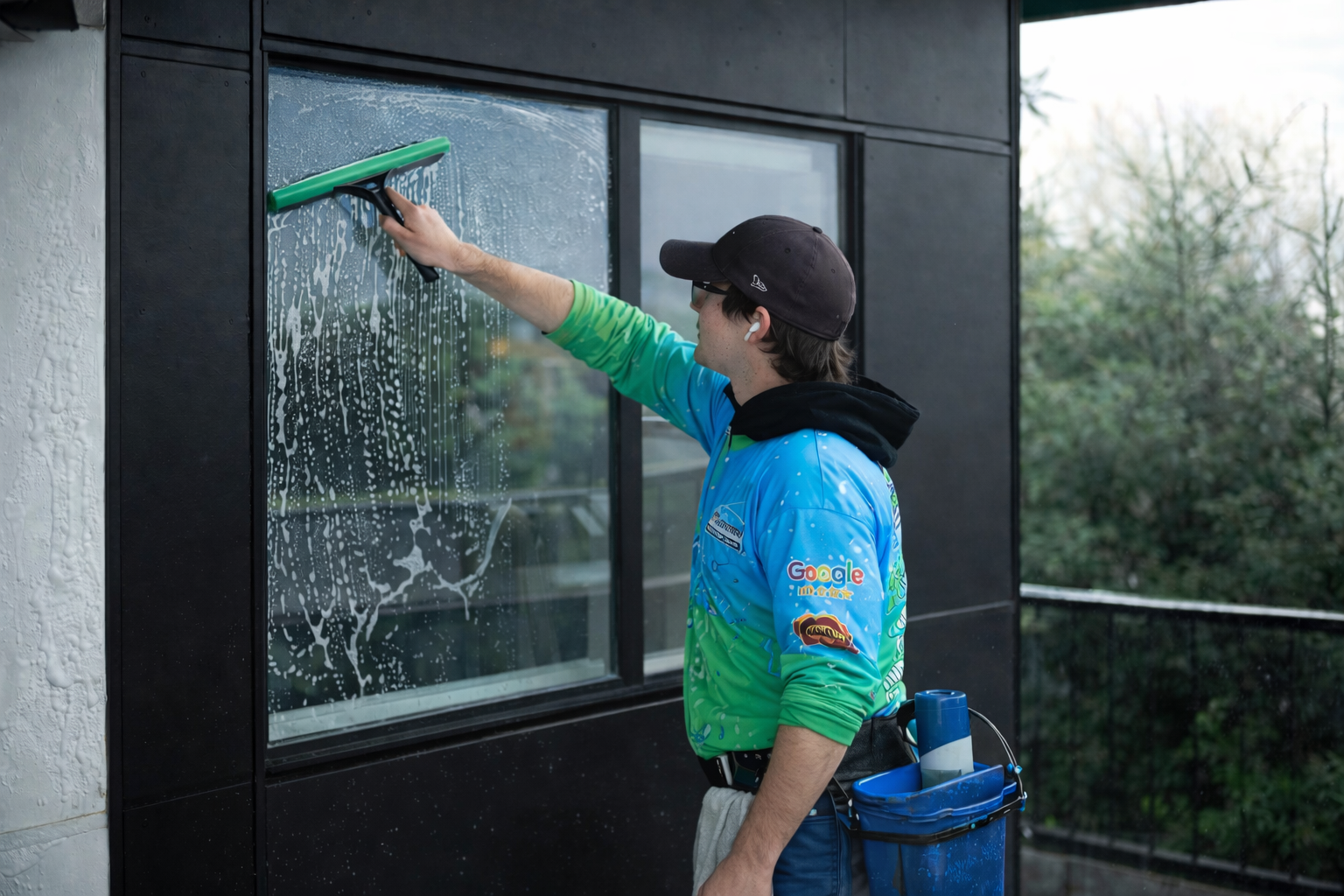
After construction or renovation, your windows are likely covered in paint overspray, stucco splatter, drywall dust, adhesive residue, and protective film. Regular window cleaning isn't enough — post-construction cleaning requires specialized techniques.
What Post-Construction Cleaning Removes
- Paint overspray and drips
- Stucco and concrete splatter
- Silicone and adhesive residue
- Drywall and construction dust
- Protective film and tape residue
- Hard water stains from construction water
- Label adhesive from new windows
Why It Requires Professional Service
Post-construction debris can permanently damage glass if not removed properly. Razor blades, which might seem like the obvious solution, can scratch modern glass coatings. Professionals know which tools and chemicals are safe for different glass types and coatings.
Timing Matters
The sooner post-construction cleaning happens, the easier it is. Fresh paint overspray removes more easily than cured paint. Schedule cleaning as soon as construction wraps — don't wait for your first regular service.
For Builders and Contractors
Post-construction window cleaning is part of delivering a finished product. Clients notice dirty windows immediately. Many builders schedule cleaning as part of their standard completion checklist.
Need post-construction cleaning? Learn about our window services or Get a Quote.
What is on the glass after a build
A new build or a renovation leaves a mix that a Saturday glass cleaner was never meant to lift. Paint mist, stucco or concrete splatter, drywall dust, silicone smears, tape adhesive, and the protective film on new units all sit on the pane at once. Some of it is loose dust. Some of it is bonded. Treating all of it like fingerprints is how people scratch a new window in the first month they own it.
The window washing Nanaimo page lists post-construction window cleaning as its own scope: construction dust, paint overspray, and tape residue from new builds and renovations. That is the line to use when you request a quote. "The windows are dirty" will be priced and staffed as a maintenance wash.
Why the usual tools are the wrong tools
A razor blade feels precise and can cut modern coatings. If you do not know whether the unit has a low-E or other coated surface, do not scrape it to find out. Silicone that has cured needs a method that does not drag grit across the pane. Stickers and film adhesive smear if you only wet them and wipe. Drywall dust looks gone when it is wet, then reappears as a haze when it dries.
Protective film should come off the way the manufacturer intended, usually a peel rather than a scrape, and sooner rather than later. Film left through a hot, sunny stretch on a west wall gets brittle and the adhesive stays behind. This site does not publish a day count for that. If the film is still on when you take possession, say so. It is part of the scope, not an extra surprise the day of the clean.
Interior dust is half the job on a renovation. If the crew only does the outside, the room side of a new slider will still look like a job site. Ask for both, and ask them to do it after the dusty trades are finished. Cleaning mid-drywall is wasted. Cleaning after the last painter is the right sequence.
How this differs from hard water and from streaks
Sprinkler spots are minerals. They feel rough and sit where water dried. Construction film is adhesive, paint, and dust, and it sits where the work happened: near a patched wall, under a soffit that was sprayed, on a new unit that still has a label. If you are not sure, send two photos, one close and one of the whole window. The hard water explainer is hard water stains on Nanaimo windows. If the glass was already cleaned and simply looks smeared, that is streaky windows after cleaning, which is a technique problem rather than a construction problem.
What to put in the quote request
- New build or renovation, and whether dusty work is finished.
- Paint overspray, stucco splatter, silicone, film, or labels, in plain words.
- Interior and exterior, or exterior only.
- Storeys and how many units are affected.
- Any pane the builder already warned is coated.
Window washing in Nanaimo typically starts at $99 for a small home and increases based on the number of windows, storeys, and access difficulty. Post-construction soil is one of the reasons a visit sits above that start. Storefronts and commercial sites are different again. Storefronts typically start around $150. Neither number is a flat price for a full renovation clean. Describe the residue so the quote matches the glass. More on ordinary pricing is in window washing cost in Nanaimo.
If you are tempted to do the ground floor yourself and hire the rest, keep the razor in the drawer and leave the painted and filmed units to the crew. Ground-floor dust you can reach is the only slice that resembles ordinary DIY, and even that goes better once the trades have stopped sanding.
Related articles
- Hard water stains on Nanaimo windows
- Streaky windows after cleaning
- Professional versus DIY window cleaning
Book construction residue through window washing Nanaimo.