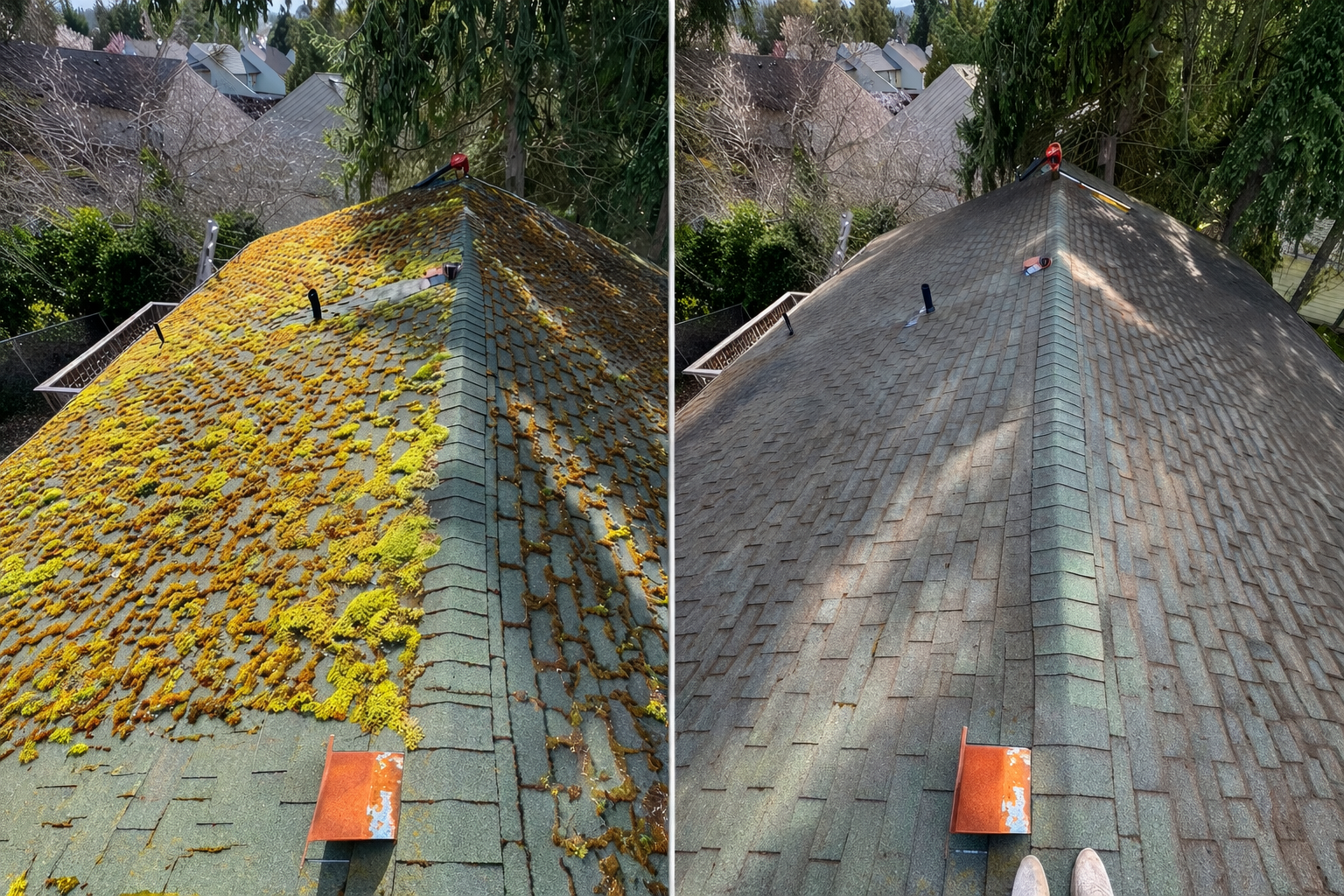
You scraped the green off last spring. By October, the same shaded pitch looks fuzzy again. That cycle is frustrating — and on central Vancouver Island, it is also predictable.
Moss does not “appear” overnight on Nanaimo roofs. Spores, shade, and damp weather keep the biology alive even after a surface clean. If you live in Nanaimo, Parksville, Lantzville, Ladysmith, Qualicum Beach, or Cedar, understanding why moss returns is the difference between chasing clumps every year and slowing the rebound with the right moss removal and roof cleaning approach.
This is not another fall timing checklist. It is the regrowth story: what DIY scrape-offs miss, how Island climate feeds the next crop, and what actually slows the return.
Why Island roofs are a moss greenhouse
Central Vancouver Island is kind to moss and hard on roofs that stay wet. Mild winters rarely freeze growth for long. Tall cedars and firs keep north and east pitches in shade. Oceanside air from Parksville through Qualicum Beach holds humidity against the shingles long after the rain stops.
A few local conditions stack the deck:
- Shade that never fully dries. Tree-lined lots in North Nanaimo, Lantzville, and Cedar can keep a pitch damp for days between systems. Moss loves that moisture window.
- Needle and cone debris. Cedar and fir litter sits in valleys and against the ridge. It traps water against asphalt granules like a sponge.
- Cool, humid nights. Harbour and Oceanside homes often see overnight damp that resets drying progress from the afternoon sun.
- Spores already on the roof. Scraping visible mats does not erase the thin film of spores and root-like structures still living in the surface.
When fall fronts stack up, that combination turns a faint green haze into a carpet. The wet season does not rinse moss away — it feeds it.
The DIY scrape trap: clean-looking is not clean
Most homeowners who say “I already cleaned the roof” mean they brushed, scraped, or pressure-rinsed the obvious clumps. The roof looked better for a few weeks. Then green returned in the same valleys.
Here is what a scrape-only pass usually leaves behind:
- Living material at the root. Moss anchors into the granule layer. Knocking off the top mat without treating the biology is like mowing weeds and expecting them not to grow back.
- Spores in every damp crease. Fine growth sits in valleys, under ridge caps, and along north eaves where a ladder and broom rarely reach evenly.
- Damaged granules from aggressive tools. Hard scrubbing or high pressure can strip protective granules, roughen the surface, and give the next round of moss an easier foothold — while still leaving living roots intact.
- Debris shoved into gutters. Scraped moss often ends up in the eavestroughs. Packed troughs overflow onto walls and walkways, and wet organic sludge sits against the roof edge where regrowth loves to restart.
A weekend brush job can improve curb appeal short-term. It rarely resets the biology that drives next season’s return.
Soft wash vs scrape: treat the living layer
Soft washing is built for surfaces that need chemistry and dwell time, not brute force. On roofs, that means low pressure plus a cleaning solution that treats moss and algae at the living layer, then a controlled rinse — instead of blasting the mat off and calling it done.
What a proper soft-wash roof cleaning aims to do:
- Reach growth you cannot brush evenly on steep or multi-pitch roofs without gambling on ladders in damp weather
- Give solution time to work so the treatment is not just cosmetic
- Protect granules and underlayment by avoiding the damage risk of a pressure wand on asphalt, cedar, metal, or tile
- Plan runoff so dead growth and rinse water do not coat landscaping or sit in packed gutters
Soft wash will not make moss impossible forever in this climate. Shade, needles, and Island damp will always favour some return. The point is to remove more of the living layer than a scrape can, so the rebound is slower — especially with clear drainage.
For fall timing, see fall roof cleaning before the rains. For the moss-plus-gutter checklist, use fall moss removal and gutter prep.
Clear gutters: the regrowth partner nobody wants to skip
Roof moss and gutters are one system on Island homes. Soft-washed debris and needle fall both head for the troughs. If those troughs stay packed, water backs up at the eaves, soaks the roof edge, and keeps the same shady strip wet — exactly where moss likes to restart.
A practical pairing looks like this:
| Step | Why it slows return |
|---|---|
| Soft-wash the roof | Treats living moss and algae instead of only scraping the mat |
| Flush and clear gutters | Removes organic sludge and keeps water moving off the roof edge |
| Check downspouts and splash zones | Stops overflow from re-wetting walls, walkways, and lower roof lines |
Our fall gutter cleaning checklist walks through what to inspect from the ground. Many homeowners combine roof and troughs in one fall visit so debris from the soft wash does not sit in the eavestroughs for the first atmospheric river.
Shade awareness: you cannot move the cedar, but you can plan around it
You will not cut every mature tree that shades a Nanaimo roof — and you should not need to. Shade awareness means knowing which elevations will always grow moss faster, and planning maintenance around those pitches instead of being surprised every October.
Local patterns we see often:
- North Nanaimo and Lantzville under tall evergreens: the sunny pitch can look fine while the north valley is already green again.
- Parksville and Qualicum Beach near the shore: damp air plus organic debris means thin film returns even when trees are thinner.
- Ladysmith and Cedar forest-edge homes: valleys and needle packing drive faster cycles; roof and gutters belong on the same schedule.
- Open, sunnier Nanaimo lots: slower regrowth, but skipped seasons still catch up once wet weather settles in.
If one elevation always greens first, flag it when you request a quote. Photos of the worst pitch and a note about tree cover help the crew plan access and treatment where it matters most.
Shade also connects to the rest of the exterior. North walls under the same tree line often show algae that responds to house washing or wall soft wash after the roof and gutters are settled — same climate stress, different surface.
What actually slows moss return (realistic Island expectations)
No honest exterior cleaner promises a forever-moss-free roof in this climate. What slows the cycle is a stack of habits, not a single miracle product:
- Treat, don’t only scrape. Soft-wash moss removal targets the living layer DIY brooms miss.
- Keep drainage clear. Needle-packed gutters keep the roof edge wet and feed the next crop.
- Time work before the long wet stretch. Fall treatment stops winter rain from feeding established mats for months. Spring-only schedules leave that biology active all wet season.
- Watch the shady pitches. Inspect the elevations that always return first; do not judge the whole roof by the sunny side.
- Reduce debris load where you can. Clearing heavy needle piles from valleys and near eaves (safely, from the ground or with a pro) cuts the moisture trap — without pretending shade will vanish.
Do that consistently and most central Island homes see slower regrowth instead of a full green carpet every year.
Common questions from Nanaimo homeowners
Why did moss come back only six months after I cleaned? Surface cleaning without treating living material, plus shade and wet-season moisture, is the usual combination. The sunny pitch may still look fine while the north valley is already restarting.
Will soft wash stop moss forever? Not in this climate. Soft wash removes more of the living layer than scraping alone, which slows return — especially with clear gutters and attention to shady elevations.
Is pressure washing enough? High pressure can strip granules, drive water where it should not go, and still leave roots behind. Soft washing is the better default for the roof surface itself.
Can I just wait until spring again? You can, but you will live with active moss through the wettest months. Fall treatment is property protection, not only curb appeal.
We only want the worst section treated — is that okay? Often yes for a first pass on a heavily shaded pitch. If gutters are packed or the rest of the roof is heading the same direction, the crew may flag that so you know what will still feed regrowth.
Slow the cycle before the wet season digs in
Moss keeps coming back on Nanaimo and central Island roofs because the climate, shade, and incomplete cleans favour it. Soft-wash removal that treats the living layer, clear gutters that stop water from sitting at the eaves, and honest shade awareness will not erase Island biology — but they will slow the rebound that frustrates homeowners every fall.
Moss Bros. Exterior Cleaning helps homeowners across Nanaimo, Parksville, Lantzville, Ladysmith, Qualicum Beach, Cedar, and the Oceanside stretch plan moss removal and roof cleaning that fits how Island roofs actually grow. Share a few photos of the pitches that green first, note your tree cover, and tell us whether you want roof only or roof plus gutters in one visit.