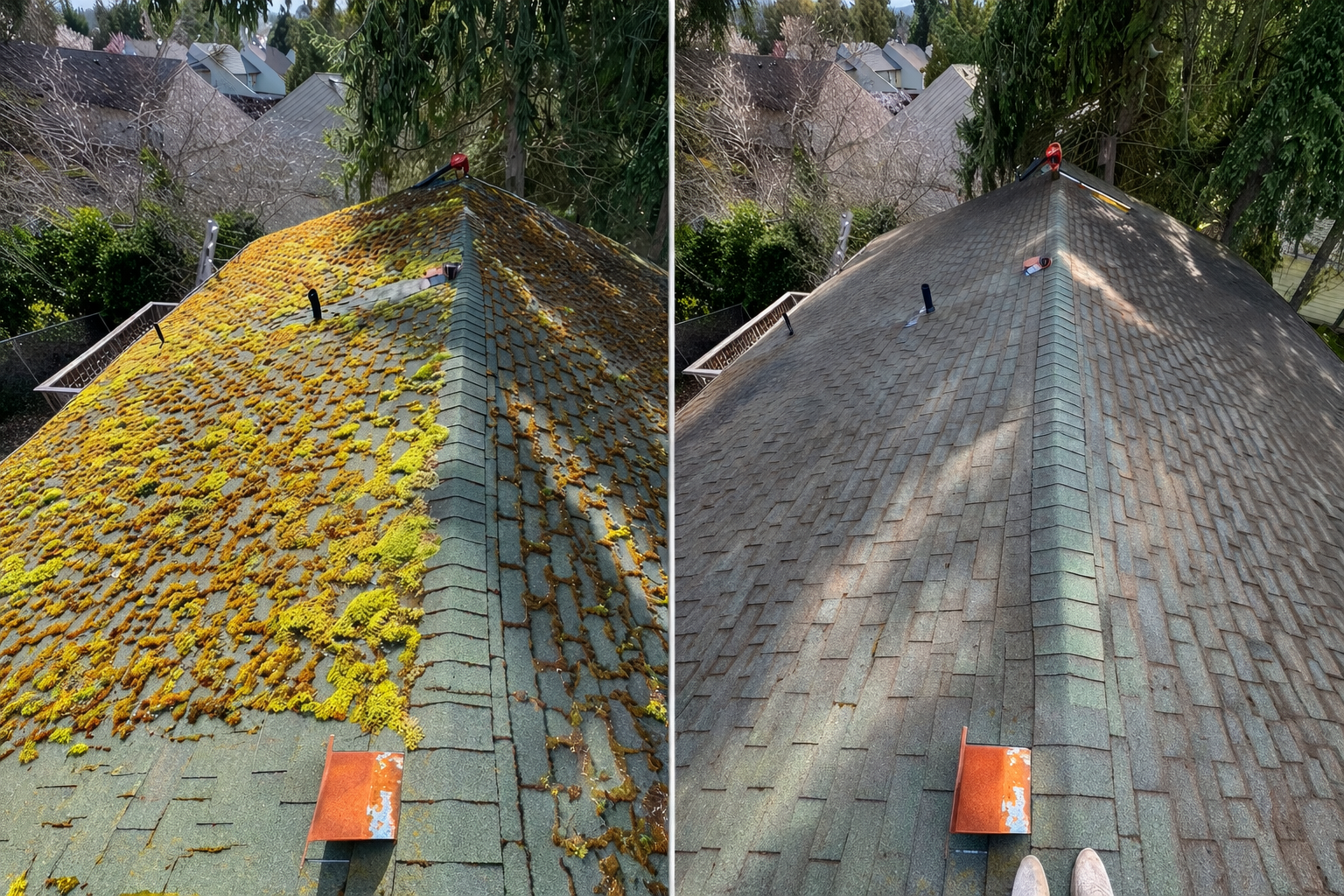
Drive through Qualicum Beach, Errington, Coombs, or the treed streets of Lantzville and you'll see plenty of cedar shake roofs. They suit the Island: warm-toned, quiet in the rain, and right at home under big firs and cedars. They also pick up moss faster and more stubbornly than almost anything else on the house.
If you have a shake roof going green this fall, the cleaning method matters more than it does on asphalt. Done gently, a clean takes the growth off and gives the wood a better shot at drying out between storms. Done hard, it can strip away the wood you're trying to protect. Here's what Nanaimo and Oceanside homeowners should know before anyone climbs a ladder.
Why Cedar Shakes Grow Moss So Easily on the Island
An asphalt shingle sheds water across a fairly sealed, gritty surface. A cedar shake is wood, and wood takes on moisture. On central Vancouver Island, where the wet season stretches from fall into spring and shaded roof planes can stay damp for days after the rain stops, that adds up fast.
A few things work against shake roofs here in particular:
- Shade and canopy. North-facing slopes and roofs under Douglas fir or cedar get little direct sun, so the wood stays cool and wet.
- Rough, split surfaces. Shakes have a natural texture that holds spores, needles, and grit, which is everything moss needs to anchor.
- Keyways. The gaps between shakes are there so the roof can drain and breathe. When needles and moss pack into them, water sits in the gap instead of running off.
- Mild winters. Moss doesn't get a hard freeze to set it back, so it keeps growing through the months most people aren't looking at their roof.
How Shake Roofs Differ From Asphalt When Moss Moves In
| Asphalt shingles | Cedar shakes | |
|---|---|---|
| What moss attaches to | Granule surface and shingle edges | The wood itself, its splits and grain, and the keyways between shakes |
| How moisture behaves | Mostly sheds off | Absorbed into the wood, slow to dry in shade |
| What harsh cleaning damages | Strips protective granules | Gouges and frays soft wood fibres and erodes the shake surface |
| Common warning signs | Lifted tabs, granules in gutters | Cupping or curling shakes, soft or darkened butt ends, packed keyways |
That last row is the key. Because the wood is softer than a shingle, the margin for error in cleaning is smaller.
Signs Your Shake Roof Needs Attention This Fall
You don't need to walk the roof to check. From the ground, or with binoculars from across the yard, look for:
- Green or dark mats along the lower edge of each course, especially on the shaded side.
- Moss growing in the gaps between shakes rather than just on the surface.
- Needle and debris build-up in valleys and behind chimneys or skylights.
- Shakes that look cupped, curled, or lifted compared with the rest of the roof.
- Gutters filling with moss clumps and wood fibre after a windy storm.
- Grey-white or yellow-green crusty patches. That's often lichen, which grips harder than moss.
One or two of these on a single slope is normal Island wear and a good reason to book a clean. Widespread curling, splitting, or soft spots are a different conversation, which we cover below.
Why Pressure Washing a Shake Roof Is a Bad Idea
It's tempting to rent a pressure washer and blast the green off. On cedar, that tends to backfire.
High-pressure water cuts into the softer layers of the wood grain. The surface frays and roughens, which gives new moss an even better place to grip. It can also drive water up under the courses and into gaps where it shouldn't be, and it wears down the shake faster than years of weather would. The roof looks clean for a few weeks, then often greens back up faster than before.
That's why our roof cleaning service never uses high pressure on roofs. For cedar shakes specifically, we use gentle techniques designed to preserve the wood's natural oils. If you want the longer explanation, our post on soft washing vs pressure washing walks through the difference.
What a Safe Cedar Shake Moss Clean Looks Like
A careful shake roof clean is less about force and more about getting the growth to let go of the wood. Here's the general shape of it:
1. Assess the roof first
Every roof is checked before work starts: the condition of the shakes, the slope, how heavy the moss and lichen are, and what's below the eaves. Plants, decks, and skylights get protected.
2. Soft wash, not blast
Soft washing uses low pressure with biodegradable moss-killing solutions that work into the growth instead of tearing it off. That treats moss, algae, and lichen at the root rather than just shaving the top layer.
3. Clear the keyways and valleys
Getting packed moss and needles out of the gaps between shakes and out of the valleys is what lets the roof drain and dry the way it was built to.
4. Flush the gutters afterward
Whatever comes off the roof ends up in the eavestroughs. A gutter flush after the roof clean keeps that debris from blocking your downspouts just as the heavy rain starts.
5. Talk about slowing regrowth
After roof moss removal we can install zinc strips at the ridge. Rain carries zinc down the roof and makes the surface less friendly to new growth. It's worth asking about for shaded shake roofs, where moss returns fastest. Our post on why roof moss comes back explains what drives regrowth on Island roofs.
Is Fall Too Late to Clean a Shake Roof?
No. Fall is one of the most useful times to do it. Removing moss before the long wet stretch means the wood isn't sitting under a wet sponge all winter, and clearing the keyways and gutters now means water has somewhere to go when the storms arrive. We work year-round, in rain or shine, and the crew decides on the day what conditions suit your roof. Our fall roof cleaning guide has more on timing.
When It's a Roofer Problem, Not a Cleaning Problem
Cleaning removes moss, algae, lichen, and debris. It doesn't fix wood that has already failed. If you're seeing any of these, have a roofer look at it, ideally before or alongside a clean:
- Shakes that are split all the way through, missing, or sliding out of place
- Soft, crumbling, or spongy wood at the butt ends
- Daylight or water stains in the attic
- Large sections that are badly cupped or curled
Being honest about this saves you money. There's no point paying to clean shakes that need replacing, and a roofer will have a much easier time assessing a roof that isn't hidden under moss.
Simple Habits That Help Between Cleanings
- Keep the canopy in check. More sun and airflow on the roof means faster drying. Have an arborist handle any branches over the roof line.
- Watch the valleys after big wind storms. Fir and cedar needles collect there first.
- Keep the gutters running. Overflowing gutters keep the bottom courses wet. See gutter cleaning in Nanaimo.
- Stay off the roof. Wet shakes with moss on them are slippery, and walking on them can crack the wood. Check from the ground.
Cedar Shake Roof Cleaning Across Central Vancouver Island
We clean cedar shake, asphalt, metal, and tile roofs throughout Nanaimo, North Nanaimo, Lantzville, Cedar, Ladysmith, Parksville, and Qualicum Beach, along with Errington, Coombs, and nearby communities. Every job starts with a look at your roof's material and condition, so you get a method that suits the wood rather than a one-size-fits-all wash.
If your shake roof is turning green, or you just want to know whether it needs a clean this fall, tell us a bit about it and we'll take it from there. For a deeper look at all roof types, see our moss removal service.