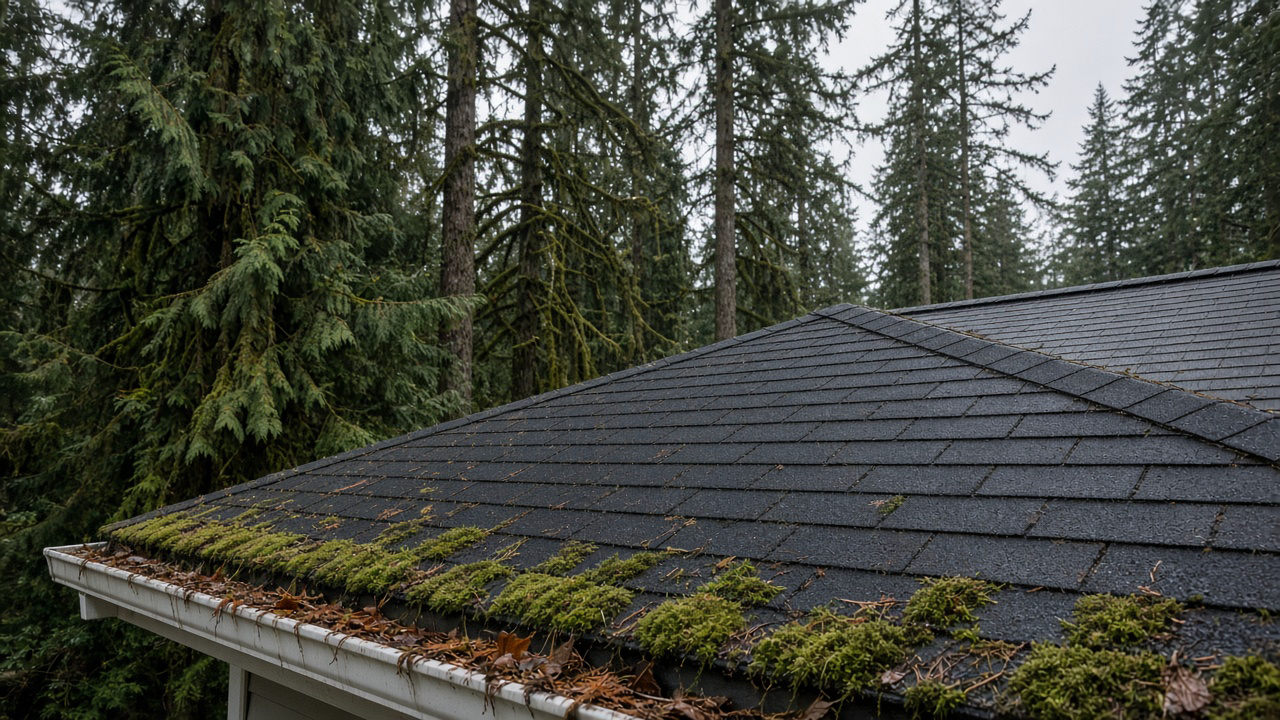
On many Nanaimo houses the street face still looks like ordinary shingles in late October. The north side, or the side under the firs, is often already green. That pitch stays damp. Moss usually takes hold there first, and the shingles there dry last.
This guide stays on that house slope. Three earlier pieces cover the neighbouring questions: why roof moss keeps coming back after a clean, where moss hides in valleys and skylights, and moss on sheds, carports and detached garages. Here the question is why the north-facing and tree-shaded pitch goes first, and why late October is when that side gets worse.
You can do the check from the yard: what to look for, what the growth means for the shingles and gutter on that side, and how to plan removal before winter. Stay off the roof. Nanaimo receives over 1,100mm of rain a year, and a wet north pitch is slick. Clocks go back on November 1, during these short damp days.
Why the north and tree-shaded slope grows moss first
Moss wants a surface that stays wet and a little texture to grip. On central Vancouver Island that often means one side of the house.
A north-facing pitch gets the least sun. In fall the sun is low in the south. A south slope can still take a few clear hours. A north slope may get only a graze at the ridge, and under trees it misses the morning an east pitch can catch.
Douglas fir and western red cedar do the rest on lots in Nanaimo, North Nanaimo, Lantzville, Cedar, Parksville, Qualicum Beach, Oceanside and Ladysmith. Branches over the ridge block that low sun. Needles and cedar scales drop on the shingles and hold the rain.
Sun angle and tree cover work together
An open north slope can still dry between systems. A south slope under a dense fir can stay wetter. The pitch that greens up first is the one facing away from the sun and sitting under trees. At midday the bright side is roughly south. A back yard is not always north, so photograph both sides. Damp air from Parksville through Qualicum Beach lingers after rain, and the shaded slope holds it.
Why late October is when that side gets worse
September can still offer a shady pitch a dry afternoon. Late October takes most of those away. Four ordinary conditions arrive in the same stretch.
The sun is already low
A north slope, and any pitch behind fir, spends the late-October day in shade. Courses that saw a little light in early fall now stay dark. After a shower the south face may lighten while the shaded side stays dark.
The nights are long and wet
Dew and drizzle sit on the shingles until the next system. Moss holds that water, and the granules under it stay cool. These long nights open the wet season.
Leaves and needles land on wet shingles
Bigleaf maple, alder, cedar scales and Douglas fir needles are dropping. A dry hour will shift some of that litter off a sunny slope. On the shaded slope it mats: needles pack between the tabs, and a broad leaf lies flat and stays. The heaviest drop is under the trees, on the side already short of sun.
The clocks go back on November 1
Daylight saving time ends on Sunday, November 1. Sunset moves an hour earlier by the clock, and sunrise with it. The night is the same length. This slope rarely catches useful morning sun. A clear afternoon may still graze a ridge from the west. After November 1 that graze ends sooner, so the slope stays dark and damp through the evening and is still wet in the morning.
The slope that looked borderline in September is the one to check now, before November rain holds it wet.
How to spot it from the ground
Stay in the yard. Wet moss is slick, and a one-storey eave is still a fall in October rain. You can decide whether to book without a ladder.
- Walk the north side and the tree side. Stand back so you see the whole pitch, and compare it with the street face in the same light.
- Look for a green fringe on the lower courses. Growth often starts at the eave, just above the gutter, then moves up. One darker slope beside a cleaner one is the pattern.
- Check after a shower, then again later. The open slope lightens as it dries. The shaded slope stays dark.
- Use binoculars on a high ridge. Upper courses under branches are hard to read from the lawn. Leave the ladder alone.
- Read the gutter on that side. Clumps, a needle mat, or green paste at the outlet mean the slope is shedding. The street trough can look clear while this run is packed.
- Photograph the slope, the eave, and that gutter. Include the trees over the ridge. Those ground-level shots are what we use to size the work.
An upstairs window may show a valley or skylight the lawn hides. If the upper roof stays hidden, say so. Include a shed or carport when it sits in the same shade.
What that moss means for the shingles
A thin film is the early sign. A thick mat holds water against the granules, and on asphalt that water sits in the tabs through winter. Note lifted edges and grit in the gutter on that side. Some granule loss comes with age. A bare patch, a curled tab, or fresh grit after every rain deserves a closer look before any wash.
On a sound roof the treatment is a soft wash: low pressure, eco-friendly biodegradable solutions, time to work, then a controlled rinse. A pressure wand can strip granules and drive water under the shingles, and still leave living growth behind. Roof cleaning and moss removal follow that soft-wash approach, with the roof type checked first. Soft washing keeps the pressure low on that greener pitch.
Asphalt is the usual surface. Cedar shake needs a lighter hand, and metal more often shows algae along the seams. Name the material, with an edge photo. Cleaning is not roof repair. Missing shingles, a ceiling stain, soft sheathing, or rotten fascia need a qualified contractor before any wash.
Soft wash slows the return. Shade can still bring moss back. The live site FAQ says most Nanaimo roofs stay moss-free for 3–5 years with soft wash. That is a range, and a north slope under dense cedar is the case that fills in sooner.
What it means for the gutter on that side
The shady eave catches moss clumps, cedar scales, fir needles, and leaves that stayed put. That run plugs while the street gutter still looks open. Water then sheets at a corner the driveway may not show.
- Overflow on the tree side only. Other downspouts may run. The quiet corner, or the one pouring over, is the outlet under the moss.
- A mat at the end cap. Needles and moss pack where the flow slows, just above the drop into the pipe.
- A streak on the fascia or wall. Colour left after the rain is overflow from this run. The siding below often greens up for the same reason. A house wash can follow once the roof water is moving.
- A puddle at that downspout. North-side ground is often damp already. Extra roof water keeps it soft against the foundation.
Gutter cleaning includes a full downspout flush, so the shady corner is tested, not only scooped. If heavy rain is already backing that spout up, the downspout guide matches the signs. A guard still passes needles. A sag, a split seam, or a crushed spout needs a qualified contractor. Cleaning will not re-hang metal. Book the gutter with the roof so spent growth from a soft wash has somewhere to go.
How to read the shady slope
Match the yard view to the next step so the booking names the slope, the gutter under it, and any repair.
| What you see from the ground | What it usually means | Sensible next step |
|---|---|---|
| Green fringe on the north or tree side, street face still clean | That slope stays wet longer than the rest | Book moss removal and name the green side |
| Slope still dark hours after a shower | The pitch is holding moisture between rains | Treat it before November locks the damp in |
| Debris only in the gutter on that side | The slope is shedding into a tight trough | Roof cleaning plus a gutter clear and flush |
| Bare patches, curled tabs, or a leak | Wear or damage under the growth | A qualified roofer before any wash |
| Thick moss on a shed, house slope only hazy | The low roof is a separate surface in the same shade | Photo both, and mention both on the quote |
Planning moss removal for that slope before winter
A freeze that pauses moss is uncommon here. A slope already green in late October stays damp through November and December. Treat a sound roof in this window, even when the street face still looks clean.
What to send with the quote
- Which way the green slope faces. North, or the back under the cedars, plus a yard photo.
- How thick it looks. A haze, an eave fringe, or clumps visible from the lawn.
- The material. Asphalt, cedar shake, or metal, with an edge photo if you are unsure.
- What is under the eave. Beds, a rain barrel, a path, or a deck, so runoff can be planned. Eco-friendly biodegradable solutions are standard on roof work.
- The gutter on that side. Overflow, a packed end, or a quiet downspout. Ask for gutter cleaning on the same visit.
- Any repair. A leak, a missing tab, or rotten fascia goes to a contractor before a wash.
What the visit covers
On a sound roof the work is soft-wash moss removal, shady slope included. Gutter cleaning on the same visit clears that side and flushes the downspouts. Two-storey work uses ladders and fall protection.
If only one side is green, clean the whole roof? On a sound roof, yes. A thin film sits on the drier slopes too. Name the green side so it is in the scope.
Scrape the fringe from a ladder first? Leave it. A wet eave is a poor place to stand, and the debris lands in the gutter.
Will a wash still help once the rains have started? It can, on a sound roof and a safe day, before months of wet weather sit on that slope.
Book the shady slope before winter
Handle the north-facing, tree-shaded side while you can still see it from the yard, before winter keeps it wet. A soft wash on a sound roof, with that gutter cleared and flushed, is the cleaning work. A leak or a failed shingle is a contractor's job first.
On the quote form you can choose Roof Cleaning & Moss Removal, Gutter Cleaning or Multiple Services. Ground-level photos of the shady slope, the trees over the ridge, the gutter on that side, and any bare or stained shingles help us size the job before we arrive. We serve Nanaimo, Parksville, Lantzville, Ladysmith, Cedar, Qualicum Beach and surrounding central Vancouver Island communities, fully insured, with eco-friendly biodegradable soft-wash solutions on roof work.